
FOR IMMEDIATE RELEASE
Avvenire Launches Solar Mobility and AI Security Solutions for Resorts, Hotels and RV Parks
Solar-assisted electric mobility and AI-enabled patrol options help hospitality properties improve guest comfort, access and safety.
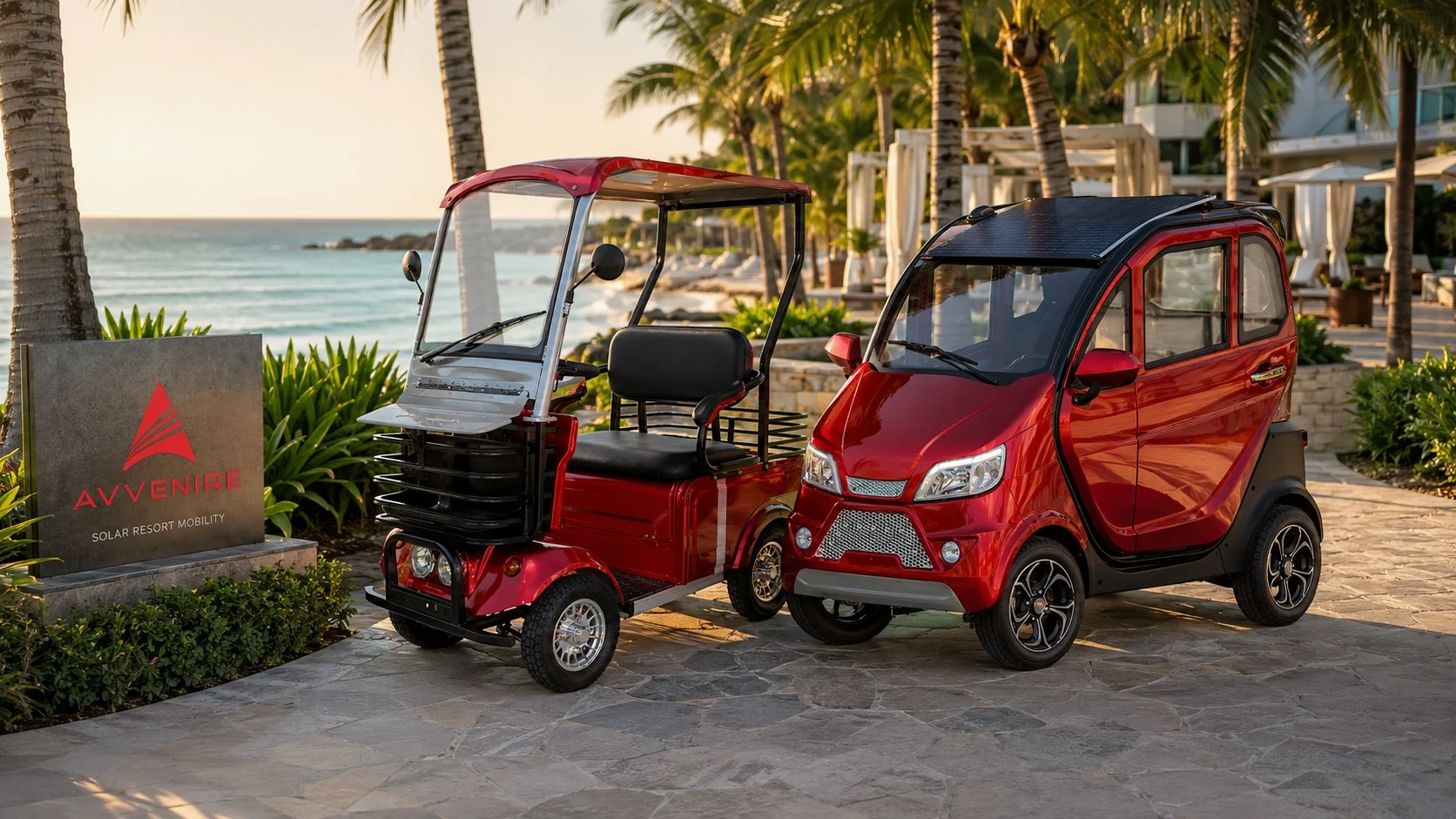
CLARINGTON, ONTARIO – Tuesday, August 4, 2026 – Avvenire is introducing Solar Resort Mobility solutions designed to help resorts, hotels, RV parks, golf properties and destination communities improve guest comfort, accessibility and property safety.
Large hospitality properties often require guests to walk significant distances between accommodations, beaches, restaurants, pools, recreation areas and parking. At some resorts, reaching the beach or another amenity can mean a walk of one to three kilometres.
Avvenire’s electric mobility vehicles give guests and staff a faster, more comfortable and safer way to move around the property. The solar-assisted Resort Series can support guest transportation, accessible mobility, staff operations, maintenance and shuttle service while helping operators reduce fuel use and operating costs.
“Guest safety, comfort and convenience are essential at every resort,” said Aldo Baiocchi of Avvenire. “Our vehicles help guests spend less time walking long distances and more time enjoying the property. They also give operators a flexible electric fleet that can be tailored to the needs of the resort.”
Beyond mobility, Avvenire offers AI Security Patrol capabilities for properties that need stronger visibility across large or remote areas. AI-enabled patrol vehicles can support security teams with camera coverage, real-time alerts, fleet management and mobile monitoring of key areas such as entrances, pathways, parking lots, beaches, marinas and recreation facilities.
The combination of electric mobility, solar support and AI security gives hospitality operators one adaptable platform for moving people, supporting operations and improving peace of mind for guests and staff.
Ideal applications include:
- Resorts and hotels
- RV parks and campgrounds
- Golf courses and golf communities
- Marinas and waterfront properties
- Retirement and lifestyle communities
- Event venues and large private properties
Each fleet can be configured around the property’s needs, from a few guest mobility vehicles to a larger fleet with solar support, custom branding, fleet-management tools and AI security patrol options.
For more information or to request a quote, visit avvenire.ca/resort-hospitality-mobility, call 647-556-4040, or contact aldo@avvenire.ca.
About Avvenire
Avvenire develops electric mobility solutions for personal, commercial and specialized applications across Canada, including eBikes, mobility scooters, light electric vehicles and commercial mobility platforms.
Planning solar mobility for your property
The announcement above introduces Avvenire’s resort mobility and security offering. The following planning guide can help a hotel, resort, campground or RV park prepare a useful fleet enquiry. Start with the people and tasks you need to support, then discuss the configuration, charging and service arrangements with Avvenire.
Which journeys should a property map first?
List the regular journeys between accommodation, reception, parking, dining, beaches and recreation areas. Include staff routes for housekeeping, maintenance and supplies. Note typical distances, surfaces, slopes, stopping points and busy times.
Different journeys may suit different vehicles: a guest mobility scooter, passenger transport and a utility vehicle serve different purposes. A map and a short description of each task help the team discuss a practical mix instead of selecting a fleet by appearance alone.
How should guest comfort and access be assessed?
Arrange demonstrations of the proposed seating, controls and boarding arrangements. Consider how guests will reach the vehicle, carry their belongings and understand its use. For an enclosed cabin, check door clearance, visibility and ventilation.
For roof or canopy configurations, review the equipment included and how any cover operates. Ask which setup suits the planned routes and operating conditions. Confirm the final configuration rather than assuming every vehicle in a model family has the same features.
What should a solar charging plan include?
Identify parking locations with useful sun exposure and note shade from trees, buildings and canopies through the day. Compare likely charging opportunities with the expected daily journeys and loads.
Solar adds energy when suitable sunlight is available; it should not be treated as a guaranteed replacement for charging access. Plan outlets, charging routines and storage around the supplied equipment and instructions. Discuss SunMatch compatibility and how parking orientation guidance could fit the property’s routine.
How can maintenance and utility needs change the fleet?
Make a list of the supplies, tools and loads staff need to move. Compare seating, cargo space, load limits and accessory requirements for each task.
If you need an inverter, confirm its ratings and compatibility with the intended equipment. Ask which accessories are included or optional and how they affect operation, charging and storage. A vehicle chosen for guest comfort may serve a different role from one configured for grounds work, so quote those requirements separately.
What should be discussed for an AI security patrol?
Describe the areas the security team needs to observe, the existing patrol routine and who will review alerts or footage. Ask which cameras, connectivity, software, subscriptions and support are included in a proposed configuration.
Clarify how the equipment supports staff and what testing or training is needed on site. The announcement describes capabilities to discuss with Avvenire; a final proposal should identify the equipment and services actually supplied for your property.
What information helps Avvenire prepare a fleet quote?
Provide the property location, intended routes, vehicle roles, expected quantities and preferred delivery timing. Include photos or measurements of parking and access areas, charging locations and any branding requirements.
Ask for the model and version, battery, solar equipment, accessories, service arrangements and delivery terms in writing. For seasonal properties, discuss operating and storage routines. A clear task list gives the team a useful basis for comparing a small initial fleet with a larger deployment.