Last Updated: November 3, 2026
Quick Summary
A solar scooter is worth it if you park in open sun, because the panel adds roughly 1 to 5 km of range per sunny day and keeps the battery off deep discharge cycles. Treat it as a supplement to plug-in charging, not a replacement, and size expectations to winter.
- Solar gain is a modest daily top-up, so plan on plugging in for long-distance riding.
- Panel harvest depends on wattage, peak sun hours, parking angle, and shade.
- Winter daylight, low sun angles, and snow can cut solar harvest sharply.
- Keep the panel surface clean weekly and park where it actually sees sky.
- Ask before buying whether the panel, charge controller, and battery are serviceable.
Table of Contents
- The Real Math Behind a Solar Scooter’s Value
- Solar Scooter Range: What Sunlight Actually Adds
- Solar Scooter Charging Time Explained
- Can You Ride a Solar Scooter at Night?
- Solar Scooter Maintenance: Keeping Panels and Batteries Healthy
- Finding a Solar Vehicle That Fits Your Daily Life
- Frequently Asked Questions
The Real Math Behind a Solar Scooter’s Value
A solar scooter is an electric scooter with integrated panels that charge the battery while parked in sunlight, and whether it pays off depends less on the panel and more on how you park. That is the short answer to “is a solar powered scooter worth it,” and it is the argument this guide from Avvenire builds on. The better question is what the scooter costs across years of daily riding, and how much charging you can erase entirely.
Purchase Price vs. Long-Term Savings
Purchase price is the wrong number to stare at. Total cost of ownership has three parts: up-front cost, electricity, and early battery replacement from hard cycling. Solar charging attacks the second and third at once. Every sunny day parked in the sun is a day drawing free energy from sunlight instead of the grid, and panels that top up the pack between rides keep the battery off deep discharge cycles, the habit that shortens battery life fastest.
Solar Scooter Range: What Sunlight Actually Adds
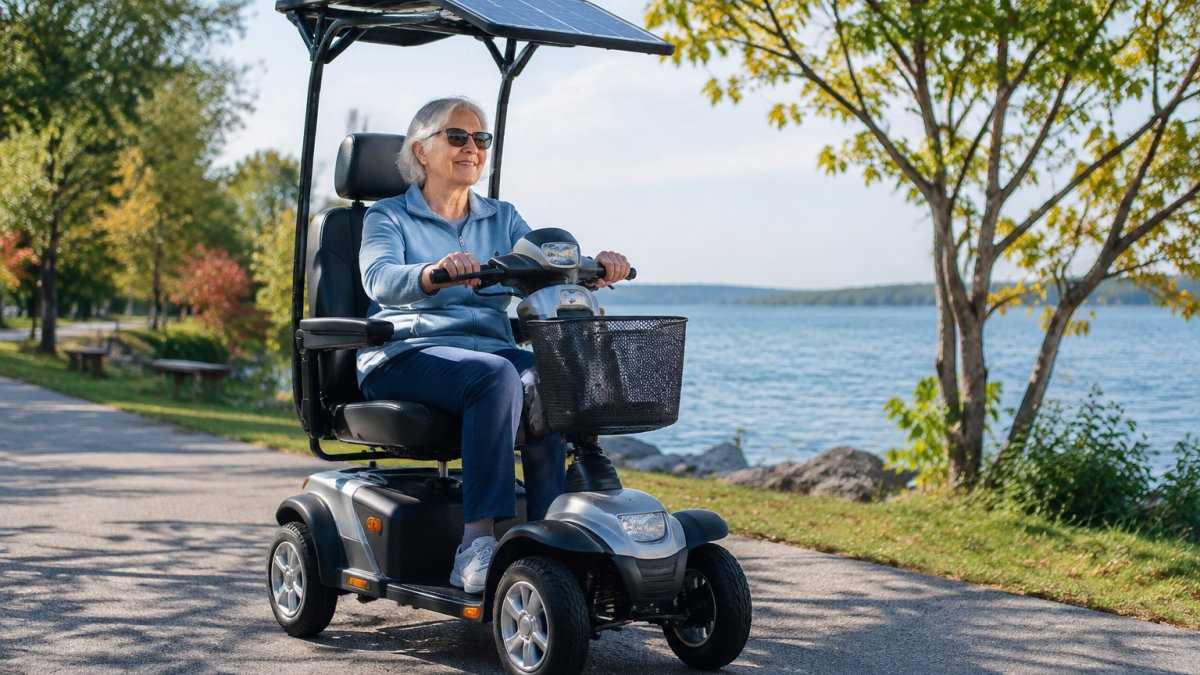
Sunlight adds a modest daily top-up, not a second battery. Fleet-operator guidance estimates that a solar scooter gains roughly 1 to 5 km of range per sunny day solar e-scooter guidance for fleet operators. Lightfoot’s solar scooter carries a 1,560 Wh battery rated at up to 60 km of range report on a solar electric scooter, though the source does not break out how much of that range comes from the sun.

Solar roofs add a modest daily top-up to range. For a rider doing short daily trips, that daily gain can cover a short loop. For long-distance riding, plan on plugging in.
What Actually Determines How Much Sunlight Adds
The daily gain is not fixed. It is the product of four variables, and most buyers only think about the first:
- Panel wattage and area. More panel area can mean more harvest, but also more weight and footprint.
- Peak sun hours at your latitude. A clear summer day in southern Ontario delivers far more usable irradiance than a December day in the same spot.
- Parking angle and orientation. A flat roof panel collects best when the sun is high; an angled panel does better in low-sun months.
Parking location strongly affects how much a solar panel contributes: a panel in open sky gathers far more energy than one in shade or indoors.
Seasonal Reality Check
Solar gain is not constant across the year. Summer’s long days and high sun angles push daily harvest toward the upper end; winter’s short daylight, low angles, and snow cover can cut harvest sharply, and a panel buried under snow produces nothing until cleared. That makes solar a seasonal supplement, not a year-round replacement for the wall charger. Size your expectations to the worst month, not the best one.
Why the Solar Option Still Pays Off
Even a modest daily top-up changes ownership in two ways. First, it extends effective range on sunny days without a plug-in session, which matters for riders whose daily loop sits just beyond a single charge. Second, topping up between rides keeps the pack out of deep discharge, the habit that shortens battery life fastest. That is the real argument for a solar option: it stretches both range and battery life so you plug in less often and replace the pack later.
Solar Scooter Charging Time Explained
Charging time depends on which charger you use, and the panel is the slow one. A wall charger refills the pack in hours; integrated solar panels trickle energy in over a full sunny day, so they suit scooters parked outdoors between trips rather than riders needing a fast turnaround. Matching your parking to the sun is the whole game, and that is exactly what our SunMatch app is built to plan around shade, battery conditions and cabin heat.
Can You Ride a Solar Scooter at Night?
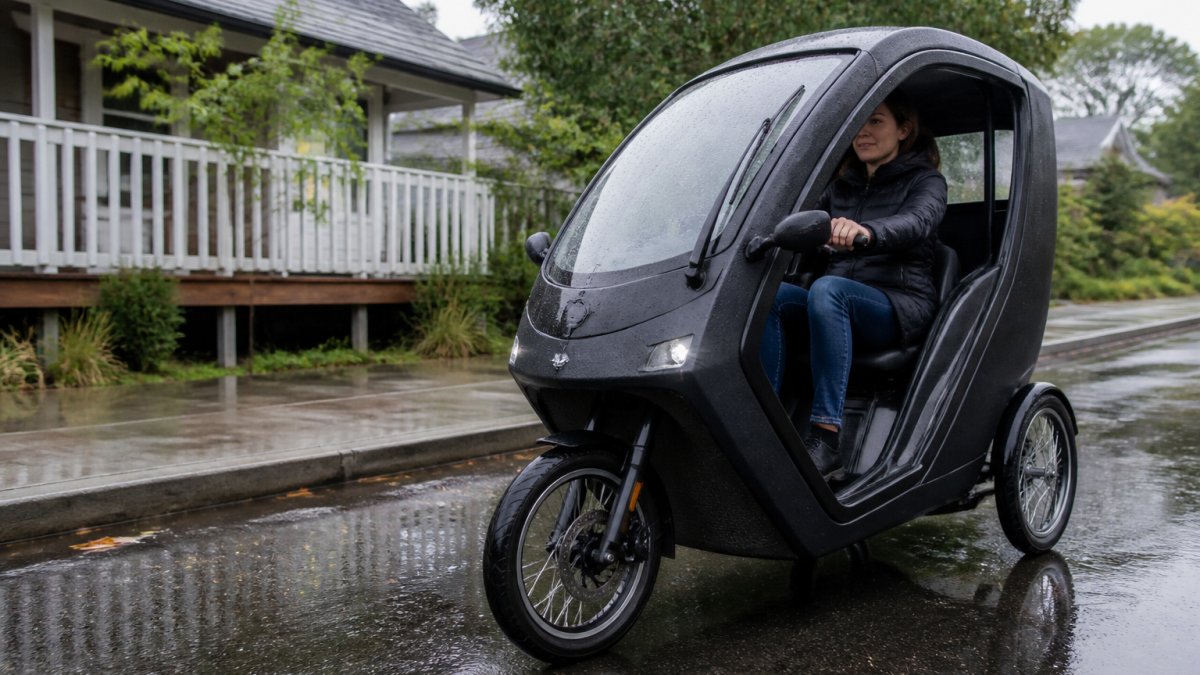
Yes, and the panel has nothing to do with it. Night riding runs on stored battery capacity, so the question is whether your pack holds enough for the trip plus a margin. Solar charging means you can start the evening with a fuller battery. Lights, reflectors and visibility matter more after dark than panel output ever will. The FreedomCab is an enclosed mobility scooter that extends usable hours into night and weather.
Solar Scooter Maintenance: Keeping Panels and Batteries Healthy
Panel care is simpler than most people expect: keep the surface clean and free of grit, and park where the panel actually sees sky. Battery care follows the same logic as any lithium pack: avoid leaving it fully drained for long stretches, charge in moderate temperatures, and let the solar top-up do the light work. A panel shaded all day by a carport or overhang will contribute almost nothing, so parking choice is a maintenance decision, not an afterthought.
| Maintenance Task | How Often | Why It Matters |
|---|---|---|
| Wipe panel surface | Weekly | Keeps energy output steady |
| Check tire pressure | Weekly | Protects range and handling |
| Full battery check | Monthly | Catches capacity loss early |
| Inspect cables and connectors | Monthly | Prevents charging faults |
| Seasonal deep clean | Twice a year | Removes grime before winter |
Battery Lifespan: The Ownership Cost Most Buyers Miss
Lithium packs degrade with use, and how you charge affects how fast. Solar charging can help keep the pack off deep discharge and reduce full grid cycles, which supports battery life. Because preserving battery life depends on making solar power practical beyond a scooter, the same charging trade-offs apply to off-grid solar setups.
Gentle charging is generally kinder to lithium batteries than frequent deep discharges.
Charging Safety
Solar and grid charging both deserve the same precautions. Use the charger supplied with the vehicle and charge in a dry, ventilated space. Do not cover the panel or charger while charging, and inspect connectors for corrosion after wet rides. If a pack swells, smells unusual, or stops holding charge, stop using it and have it inspected.
Repairability and Parts Availability
The parts that wear are the battery, tires, brakes, and connectors, so ask before buying whether those are stocked and serviceable locally. A solar roof that cannot be replaced or repaired independently is a liability, not an asset. Ask whether the panel and charge controller are serviceable components and whether the battery can be sourced later.
Why the Solar Option Changes the Maintenance Math
Every sunny day the scooter sits parked in the open is a day it draws free energy from sunlight instead of the grid, and a day the pack avoids a deep cycle. Over a season, that adds up to fewer plug-in sessions, lower energy consumption, and a pack that reaches replacement later. The maintenance routine above keeps the hardware healthy; the solar option keeps the battery healthy between routines.
Finding a Solar Vehicle That Fits Your Daily Life
The right solar vehicle depends on your riding profile, not the spec sheet. A rider doing short errands in fair weather gets the most from a solar top-up. A rider facing snow, ice and long dark evenings needs an enclosed cabin and a pack sized for real winter range, not brochure numbers. That is where the decision framework helps:
- Short daily trips, mild climate: a standard solar scooter covers it.
- Year-round riding, harsh weather: an enclosed model with a solar roof.
- Heavy cargo or resort fleets: a utility scooter built for payload.
Explore Avvenire solar mobility scooters to compare enclosed and covered models and see how solar charging fits your routine.
Frequently Asked Questions
Is a solar-powered scooter worth buying?
It depends on how you ride. If you park outdoors in sunlight most days and want to cut charging costs, a solar scooter adds a modest daily top-up of range, and it can reduce how often you plug in. For riders who mostly park in garages or ride at night, the solar benefit is smaller. Look for a model with a genuine integrated panel and a battery rated in watt-hours so you can compare real capacity.
How much can solar charging extend a solar scooter’s range?
A solar scooter gains a modest amount of range per sunny day from its panel. That is a supplement, not a full replacement for plug-in charging. The exact amount depends on panel size, sunlight hours, and your riding conditions. Treat solar as a way to top up between rides and extend battery life, rather than a guarantee of unlimited free distance.
Can you ride a solar scooter at night?
Yes. The solar panel charges the battery during daylight, and the battery powers the scooter whenever you ride, including after dark. Night riding does not draw on the panel directly, so your range comes from stored energy. Make sure your scooter has working headlights and reflectors, and check your battery level before an evening trip since the panel will not add charge until the next sunny day.
How do you maintain a solar scooter battery and panel?
Wipe the panel with a soft, damp cloth to keep dust and grime from blocking sunlight, and park in the sun when you can. For the battery, avoid leaving it fully drained for long periods and store it in a dry, moderate spot. Follow the manufacturer’s charging guidance.
The honest challenge is that solar charging rewards riders who plan their parking, and punishes those who don’t. We build every Avvenire ride with a solar option that extends range and battery life, so you can go longer between plug-ins and run on free, renewable energy. Every model carries our two-year warranty, and our enclosed designs keep you riding through Canadian winters. Get started with Avvenire and put the sun to work on your daily commute.