Last Updated: November 4, 2026
Quick Summary
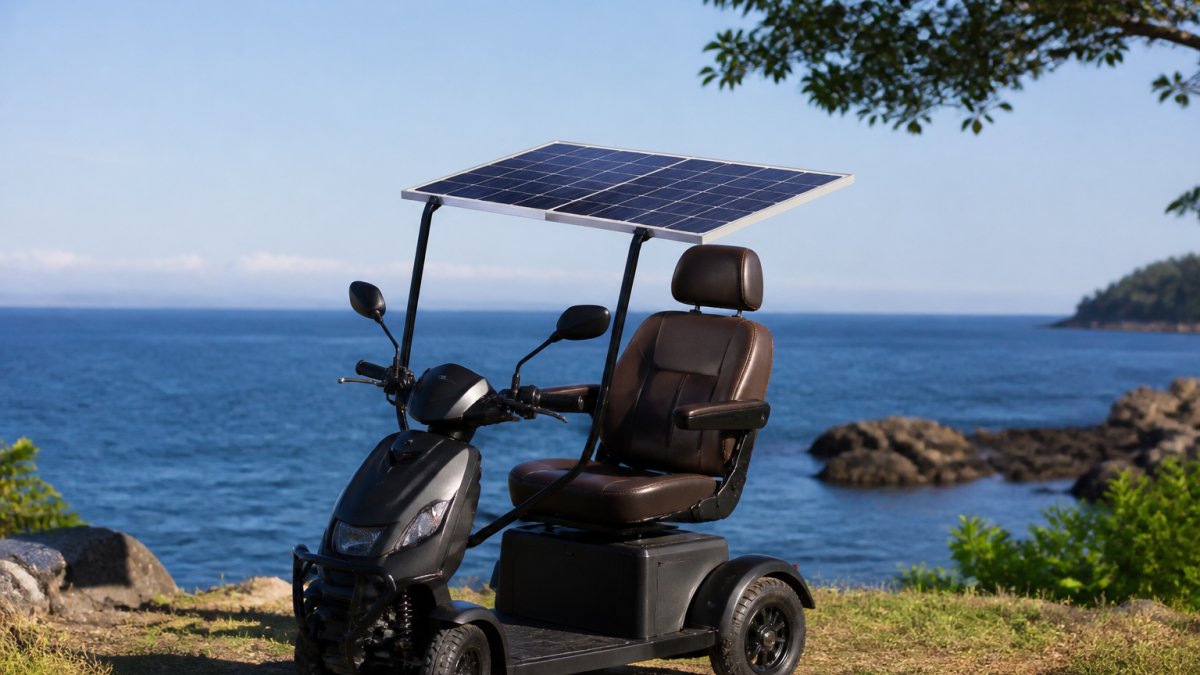
The best solar mobility scooters for Ontario riders combine a solar roof that adds range while parked in daylight with an enclosed all-weather cabin for winter. Avvenire’s FreedomCab Lithium suits year-round commuting, while the Loadrider suits daily errands in Orono.
- Solar roofs feed the battery while parked, so you can extend range without plugging in.
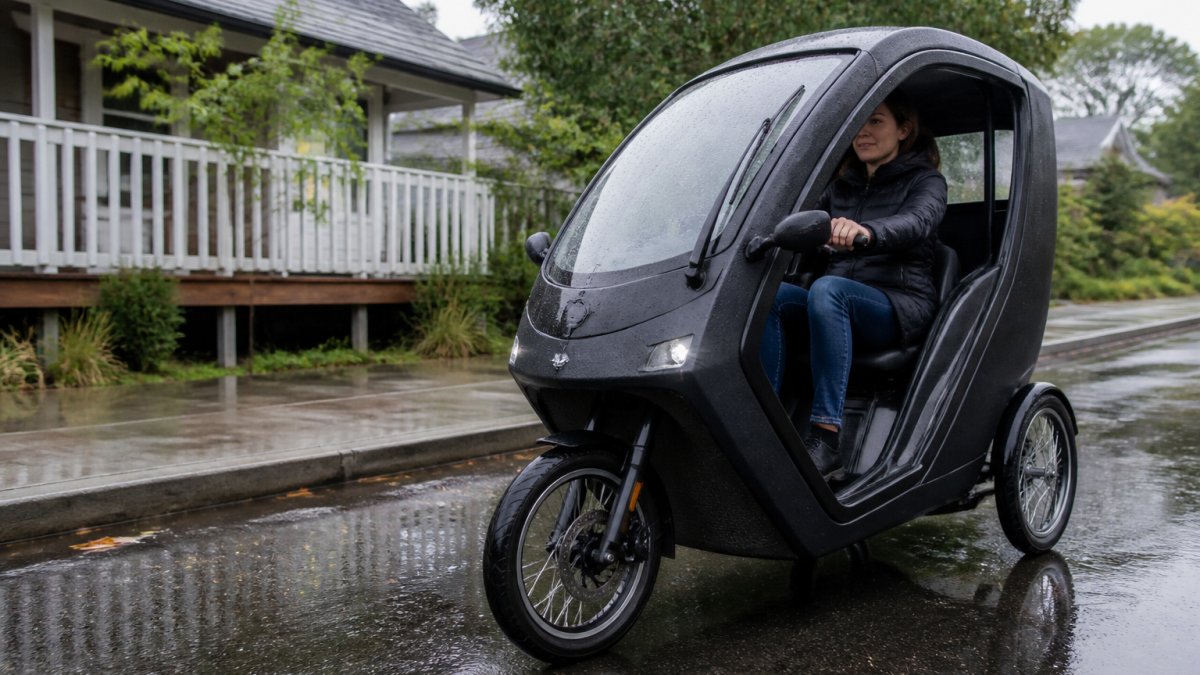
- The FreedomCab Lithium is fully enclosed, with heating, air conditioning, wipers and a backup camera.
- The Loadrider adds up to 10 km of range a day and carries a 440 lb payload.
- Solar output drops in winter, so plan for regular charging from December through March.
- Check Municipality of Clarington bylaws before riding on sidewalks or roads.
Table of Contents
- What Makes a Solar Mobility Scooter Different
- How Solar Charging Extends Range and Battery Life
- Enclosed All-Weather Scooters for Ontario Winters
- Solar-Powered Electric Scooters Ontario Riders Can Use Today
- Ontario Rules for Electric Scooters and E-Bikes in 2026
- Comparing Solar Scooters for Daily Errands, Commuting and Rough Terrain
- Choosing Your Solar Scooter and Booking a Demo With Avvenire
- Frequently Asked Questions
What Makes a Solar Mobility Scooter Different
Solar mobility scooters are different because they can recharge themselves while you ride or park. Avvenire builds Canadian-made models with a solar option, so you can extend range and battery life without plugging in at all. Here is what that means for daily use in Ontario.
Most mobility scooters rely entirely on a wall outlet. That works, but it means planning every trip around charging time. A solar roof changes that routine. Sunlight feeds the battery while the scooter sits outside, which means energy you would otherwise pay for at the outlet comes from the sun instead.
The energy is free and renewable. Once the scooter is purchased, the sunlight costs nothing to collect. For riders who want a quieter, cleaner way to get around, that matters.
Solar output depends on conditions. Clouds, shade and the time of year all affect how much charge the panels collect. Treat solar as a range extender that supplements regular charging, not a replacement for it.
How Solar Charging Extends Range and Battery Life
Solar charging adds range by topping up the battery whenever the scooter is parked in daylight. Parking in direct sun, rather than under a tree or in a garage, gives the panels the most to work with.

Battery life also benefits from shallower charge cycles. When the panels add small amounts of energy throughout the day, the battery does not need to be drained as deeply before each charge. Over time, that gentler pattern is one way to help the battery hold its capacity.
Avvenire recommends parking with the solar roof facing the sun whenever you can. An outdoor spot at a store entrance or a sunny driveway usually works better than a shaded garage. The SunMatch app from Avvenire shows how parking position affects the free solar energy your battery stores, and it is available now on Google Play, with iOS coming soon.
Enclosed All-Weather Scooters for Ontario Winters
Ontario winters bring snow, rain and cold, and an open scooter can leave riders exposed for much of the year. Enclosed all-weather designs address that problem directly.
The FreedomCab Lithium is a fully enclosed mobility scooter with heating and air conditioning, a backup camera, a sunroof and windshield wipers. Those features keep the rider comfortable and visible across seasons. Enclosed cabins also protect against wind and wet pavement, which matters on early morning and late evening trips when temperatures drop.
Solar panels work best in bright weather, so winter output will be lower than summer output. Plan for regular charging during the colder months and use solar to add range on sunny days.
Solar-Powered Electric Scooters Ontario Riders Can Use Today
Several solar-equipped models suit Ontario riders who need a practical, everyday vehicle. The Loadrider Mobility Scooter is a Canadian-built utility scooter with a solar roof that adds up to 10 km of range a day. It carries a 440 lb payload, has a range of up to 50 km, and includes front and rear baskets, a hard roof and a wiper.
Riders who run errands or carry groceries will find the baskets and payload useful. The solar roof works quietly in the background, adding range while the scooter is parked in the sun.
For riders who want to compare models before buying, Avvenire’s product pages list the current specifications. Pricing depends on the model, options and delivery, so contact Avvenire directly for a current quote.
Ontario Rules for Electric Scooters and E-Bikes in 2026
Ontario’s rules for electric mobility devices depend on how the vehicle is classified, and the distinctions matter before you buy. The province separates e-bikes (which generally have pedals and a motor up to 500 W) from mobility scooters (which are treated as pedestrian-adjacent devices), and each category carries different requirements for helmets, licensing, insurance, and where you can ride. Because e-bikes and mobility scooters follow different rules, an electric bike buyer’s guide can help clarify which category—and its riding requirements—fits your needs.
For e-bikes in Ontario, riders must be at least 16, wear an approved bicycle helmet, and follow the same rules as bicycles, which means no riding on sidewalks and full compliance with the Highway Traffic Act. E-bikes do not require a licence plate, registration, or insurance in most cases, but they must have working brakes, a horn or bell, and reflectors. Power-assisted bicycles are allowed on roads and in bike lanes, but municipal bylaws can further restrict where they operate.
Mobility scooters fall under a different framework. Ontario treats them as pedestrian devices when used on sidewalks, and riders are expected to follow pedestrian signals and yield to foot traffic. On roads, local municipalities set their own rules, some allow scooters on lower-speed streets, others restrict them to sidewalks only. In Orono and the surrounding Clarington area, riders should check with the municipality before assuming road access, especially on busier routes like Main Street or Taunton Road.
A key point for solar-equipped models: Ontario does not currently have a separate registration or licensing category for solar-assisted scooters, so they generally follow the same rules as their non-solar equivalents. The solar roof does not change the vehicle’s legal classification. That said, enclosed models with cabins may be treated differently from open scooters depending on width and speed, so confirm with the province or your local municipality before riding on public roads.
Watch out: Municipal bylaws in Durham Region can change, and a route that is legal this year may be restricted next year, always verify current local rules before relying on a specific path.
For the most current official guidance, consult the Ontario Ministry of Transportation’s page on e-bikes and power-assisted bicycles, and contact the Municipality of Clarington for local sidewalk and road-use bylaws. Avvenire can help you understand which category a model falls into, but the provincial and municipal guidance is the final word.
Comparing Solar Scooters for Daily Errands, Commuting and Rough Terrain
Orono is a small community in Clarington, and the riding conditions here differ from what you would find in downtown Toronto or Ottawa. The terrain around Orono includes rolling hills on the rural roads north of Highway 2, paved but uneven shoulders on many connecting routes, and a mix of sidewalk and multi-use trail infrastructure near the town center. Typical trips are short, a run to the grocery store, a visit to the library, or a commute to a nearby workplace, but the hills and seasonal weather make range and traction important.
For daily errands in Orono, the Loadrider Mobility Scooter is a practical fit. Its front and rear baskets and 440 lb payload handle groceries and supplies, and the solar roof adds up to 10 km of range per day while parked outside. The 50 km range covers most local errands with margin to spare, even on hilly routes. Riders who need to carry larger items or make multiple stops will appreciate the utility-focused design.
For all-weather commuting, the FreedomCab Lithium is the stronger choice. Its enclosed cabin with heating and air conditioning, backup camera, sunroof, and windshield wipers keeps the rider comfortable and visible across Ontario’s seasons. On cold mornings or wet afternoons, the enclosed design protects against wind and road spray, which matters on routes like Taunton Road or the rural roads north of Orono where exposure is higher. The solar option extends range and reduces reliance on wall charging, though winter output will be lower than summer output.
For riders who want to leave pavement behind, the Tectus Scope 2026 is built for trails and rough ground. The rural trails and conservation areas around Orono and Clarington offer opportunities for off-road use, and the Tectus Scope’s suspension and sturdy frame suit that kind of riding. It is less suited to daily errands on pavement, where an enclosed model with storage is more practical.
The table below summarizes which model type suits which Orono use case:
| Use Case | Best Fit | Why |
|---|---|---|
| Daily errands in town | Loadrider Mobility Scooter | Baskets, 440 lb payload, 50 km range |
| All-weather commuting | FreedomCab Lithium | Enclosed cabin with heat, wipers, backup camera |
| Rough terrain and trails | Tectus Scope 2026 | Off-road suspension and sturdy frame |
| Solar range extension | Any solar-roof model | Free daytime energy, up to 10 km/day added range |
A note on winter and shoulder-season riding: Ontario winters bring snow, ice, and cold that reduce battery range and traction. Enclosed models protect the rider, but all riders should plan for more frequent charging in cold months and consider winter tires or studded options where available. Solar output drops in winter, so treat solar as a supplement rather than a primary charge source during December through March.
For riders who want to compare models before buying, Avvenire’s product pages list current specifications. Pricing depends on the model, options, and delivery, so contact Avvenire directly for a current quote.
Choosing Your Solar Scooter and Booking a Demo With Avvenire
Choosing the right solar scooter comes down to three questions: where you will ride, how far you need to go, and how much you will be outdoors in bad weather. Answer those first, then narrow the options to the model that fits.
Avvenire offers the EcoSphere mobility scooter, and the product page lists current details. To review specifications and check availability, contact the Avvenire team. Pricing depends on the model and options, so ask for a quote and ask about the two-year warranty that covers every ride.
Ready to see a solar scooter in person? Contact Avvenire to book a demo and find a dealer near you.
Frequently Asked Questions
Are electric bikes and scooters legal on Orono roads and trails?
Rules for electric scooters and e-bikes in Ontario depend on the vehicle class, motor power and where you ride. Check the current Highway Traffic Act provisions and any municipal bylaws in Orono before riding on public roads or trails. Avvenire can help you match a model to the place you plan to use it, but confirm local rules with the Township or your municipality before you ride.
Does a solar option mean I never have to plug in?
A solar option adds charging from daylight so the battery is topped up during use, which can extend range and reduce how often you plug in. It does not replace grid charging entirely on cloudy days or in heavy winter conditions. Solar charging is renewable and free once installed, so it reduces plug-in time without guaranteeing zero charging.
Will an enclosed scooter work through Ontario winters?
Enclosed all-weather models are built to keep riders shielded from rain, wind and cold, which makes them practical for shoulder seasons and winter errands. Battery performance drops in very cold temperatures, so plan for shorter range in deep winter. Ask Avvenire about the specific model and how it handles Ontario conditions.
What does the two-year warranty cover?
Avvenire offers a two-year warranty on every ride. Coverage details, including what parts and services are included and how repairs are handled, should be confirmed directly with Avvenire. Contact the team through the Find a Dealer page to review the warranty terms for the model you are considering.